Poverty in families
A recent study showed that nearly half of parents are struggling financially after having a baby.
In some cases this has even led to them watering down baby formula milk in order to save money. This can be really serious for an infant, as it may result in growth problems and developmental delays. Baby banks supply clothes, nappies and baby wipes to parents, but get few donations of baby milk.
This is what life can be like for some of the poorest workers under capitalism: essential items such as baby formula can barely be afforded. A society that results in this level of poverty needs to be replaced by one where meeting human need is the priority.
SPGB Meeting Tonight
WHAT HAPPENED IN AUGUST? (Zoom)
Event Details
General discussion on events last month.
To join the meeting click https://zoom.us/j/7421974305
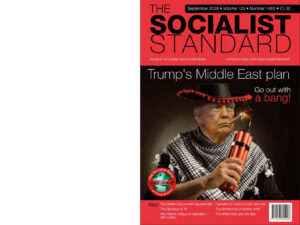
Socialist Standard September 2026 Now Available Online FREE
Hold the tears
So Starmer is about to resign as an MP. This will allow him to follow the plan he set out after he resigned as PM, i.e.:
“I will now focus on other things and that will be international affairs including defence, security, trade and technology in a fast-changing world.”
A cynic might translate this as:
“I shall reap the dividend of eleven short years in parliament by selling the tiny remnants of my soul to defence corporations, multinationals, big tech, bankers and investors. A quick message to all of you who have worked 40 odd years to gain a pitiful pension to last you through your uncomfortable final years, it appears you joined the wrong pension scheme. So long suckers”
Great Memories

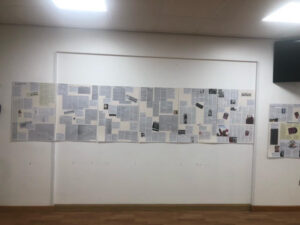


A week is a long time in politics it was once said. A week ago a fun time was being had by many at the Socialist Party’s Summer School. The theme was populism.
There was lots of time in between the interesting and educational talks to catch up with old comrades and to meet new ones.
Oscar Wilde said he could resist everything but temptation. The temptation to purchase books and other things proved too great for many of us.
A games activity started out as competitive between several teams but in the spirit of true socialism ended up in a collective effort to solve the Bletchley Park level quiz.
One of the highlights of the weekend, among many, was the interesting display of t-shirts worn, by the males, on a Marxian theme.
The t-shirt pictured has the message in Catalan that in life choices have to be made, fence sitting is not an option, sides have to be chosen. The wearer, like the rest of us, chose socialism.
We look forward to repeating the positive experience again next year.
Himalayan flash floods
With record summer heatwaves and ‘weather whiplash’ events, global warming is fast becoming normalised. Now shocking video has emerged of unsurvivable flash floods in Nepal and Tibet, probably caused by a melting Himalayan glacier. Geologists have been warning about this for years, and there have been similar previous floods.
The death toll continues to rise as the water recedes. Rescue work is underway as local villagers scramble to help survivors, and aid workers pour in from elsewhere. But in the boardrooms of the world’s corporate powerhouses, eyes do not move from the bottom line figures. Nothing matters except profit, even while capitalism heats the planet and melts glaciers.
Until we abolish this inhumane system, these human tragedies will continue.
Poverty in families
A recent study showed that nearly half of parents are struggling financially after having a baby.
In some cases this has even led to them watering down baby formula milk in order to save money. This can be really serious for an infant, as it may result in growth problems and developmental delays. Baby banks supply clothes, nappies and baby wipes to parents, but get few donations of baby milk.
This is what life can be like for some of the poorest workers under capitalism: essential items such as baby formula can barely be afforded. A society that results in this level of poverty needs to be replaced by one where meeting human need is the priority.
Mass delusion?
‘Mass delusion’ is among the many labels that have been attached to Donald Trump’s rule and the support for him by tens of millions of Americans. But what about the delusion that affects the vast majority of the world’s population? They believe it’s natural and inevitable that millions should suffer grinding poverty while the 56,000 wealthiest people on the planet own assets three times as large as those of the poorest half of humanity combined .
There’s nothing natural/inevitable about this at all. We can fix it but only if that majority comes together to set up a system of common ownership and voluntary cooperation with free access to the abundant goods and services the world could provide..
The Socialist Party of Great Britain – Part of the World Socialist Movement
SPGB Summer School on Zoom
Talks will be streamed through the SPGB’s Zoom channel. To connect to a Zoom meeting, click https://zoom.us/j/7421974305
Friday 21 August
7.15pm—8.45pm
Populism As A Keyword
Words change meaning, and have contested meanings (especially political words). This talk will look at the origin of the word ‘Populism’, showing how it has roots in particular movements, moments and practices that defined it at birth and have shaped its evolution into the word we use now. The talk will range from the Wizard of Oz to the Beatles, and will then come back to try and understand what populism means today.
Speaker: Bill Martin
Saturday 22 August
10:00am—11:30am
Rage Against The Dying Of The Right
The rise of populism and fascistic politics is undeniable. But should world socialists be too pessimistic? Beneath the waves of fascistic performative politics tectonic changes in class consciousness appear to be happening. This talk will try to look at populism as an insight to what really matters: the state of global working class consciousness.
- Are we being ‘gaslit’ about the strength of populism?
- Is this really a new era? Or the same old authoritarianism of capitalism, just without the pretence?
- To what extent is the working class around the world genuinely embracing conservative or nationalistic views?
- Is the rise of the far-right actually a desperate tactic by a ruling class running out of ideas?
- Is this just a temporary tech-driven anomaly (subsidized by billionaires and driven by outraged algorithms) which humanity will soon learn to overcome?
Speaker: Brian Gardner
2.00pm—3.30pm
In Search Of Left-Wing Populism
Most populist parties are right-wing (Reform UK, Fidesz in Hungary), but it has been suggested that populism could also apply to left-wing organisations (such as the Greens, maybe, or Podemos in Spain). An article in Jacobin suggested that left populists ‘have prioritized a defense of popular over national sovereignty’; this would be in contrast to national populism, an ideology which prioritizes ‘the culture and interests of the nation’ (Eatwell & Goodwin).
We will explore claims such as these and look at how standard populist positions could apply to the left, such as the division between the people and the elite, and opposition to pluralism. Is populism really such a vague notion that it can include a wide range of views?
Speaker: Paul Bennett
7.15pm—8.45pm
Red-Brown Politics In Russia And Beyond
Post-Soviet Russia has witnessed the emergence of a distinctive ‘red-brown’ political ideology, blending Soviet and Stalinist themes with ideas from the nationalist or neo-Tsarist far right. As early as 1996, the leader of the official Communist Party of the Russian Federation was speaking of Russia’s innate imperial destiny and endorsing the old Tsarist slogan ‘Orthodoxy, autocracy, popularity’ (the last word here could also be translated ‘nationality’, or indeed ‘populism’).
The left / right synthesis began in the Russian opposition, among figures like the ‘National Bolshevik’ novelist Eduard Limonov, the ‘patriotic’ general Albert Makashov, and perhaps above all the writer and newspaper editor Aleksandr Prokhanov. But aspects of it have subsequently been borrowed by the Kremlin’s propaganda operations, for audiences both inside Russia and abroad. And attempts to do something similar have been made in other countries (even, to a limited extent, in Britain): ‘populists’ of left and right have been invited to sink their differences and join forces against the ‘globalist elite’. This talk will provide an introduction to the ‘red-brown’ worldview: was Stalin a saint? Will he yet come back from the dead to redeem his people? And could any of it catch on here?
Guest speaker Edmund Griffiths
Edmund Griffiths is the author of Aleksandr Prokhanov and Post-Soviet Esotericism (2023): “a veritable map of ideological trends and fads in a disoriented […] society” (Slavic Review)
Sunday 23 August
10.00am—11.30am
Should / Could Socialism Be Populist?
Populism is any political message that’s popular, regardless of merit or political orientation. Ideas become popular when they resonate with how people think. And just how do they think? In Thinking, Fast and Slow (2011), psychologist and Nobel prize-winning behavioural economist Daniel Kahneman identifies two modes of thought. System 1 is fast, heuristic and emotional. System 2 is slow, effortful, logical and dispassionate.
In the whirl of everyday life, says Kahneman, people get by with System 1 thinking. But that’s highly vulnerable to manipulation by populist politicians. We generally explain the socialist case in the language of System 2 thinking, because we need people to understand it, not just react emotionally to it.
Which gives us a problem. If socialism is ever to succeed, it must first become popular, and to do that, it must contend with System 1 thinking. People won’t listen to us if we don’t speak their language. Is a populist socialist approach possible? What would it even look like?
Speaker: Paddy Shannon