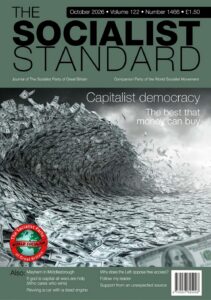
Author: cynical but optimistic

Ann Widdecombe

The Third Estate

Is the majority in the world today still equivalent to the Third Estate (Tiers état), which was the vast majority of common folk in pre-revolutionary France? Whom did the French Revolution of 1789 most benefit?  Global liberté, égalité, fraternité isn’t with us yet but will be one of the many benefits that socialism brings when it has made capitalism history.

Obstacles to Capitalist Development

Pre-1789 France is best described as a country in which capitalism had been developing within a framework of political and social institutions inherited from feudalism, which had become an obstacle to its further development. The question that then arose was: how were these obstacles to be removed? By reform from above or by revolution from below? Some of the king’s advisers and administrators were aware of what was required. The conscious economic aims of the revolution (see inset) had in fact been worked out by a group of French Rationalist Philosophers who called themselves économistes or physiocrates. They held that there were natural laws governing the production and distribution of wealth just as there were other laws of nature and that governments should let these economic laws operate spontaneously. Hence their slogan laissez-faire which strongly influenced the similar idea put forward by Adam Smith in his Wealth of Nations that appeared in 1776. A number of royal officials, including ministers, had been Physiocrats, but had come up against all sorts of resistance in trying to carry out reform from above…


The achievement of the French Revolution was to abolish aristocratic privilege but it maintained, and consolidated, plutocratic privilege. After the revolution it was wealth as such and no longer noble status that constituted privilege. In short, it established a capitalist state in which the only distinction between people was the purely economic class distinction between those who owned property and those who did not. It paved the way for the last class struggle in history, which can only be ended by the victory of the propertyless class and the establishment of a classless, socialist society based on the common ownership of the means of production, as envisaged before their time by Babeuf, Maréchal, Buonarotti and others involved in the Conspiracy of the Equals of 1795-6‘.’

Adam Buick

The whole piece can be read at:

https://socialiststandardmyspace.blogspot.com/2013/07/1789-frances-bourgeois-revolution.html


Child Labour in Lebanon

In Lebanon, more and more boys and girls are being forced to work to help support their families. Child labour is not a choice: it is the result of poverty, displacement, insecurity, and a lack of alternatives.

They are not yet eighteen years old; often, they are much younger. In most cases, they do not go to school but spend their days in fields, on construction sites, in mechanic workshops, markets, and car washes. Others collect scrap metal or do domestic work. Many work between eight and twelve hours a day, often six days a week, for very low pay. This is the daily reality for countless children in Lebanon, where, after years of economic crisis, political instability, and reduced humanitarian assistance, child labour has become an extreme survival strategy for many families.

On the occasion of World Day Against Child Labour, [June 12, 2026] we want to draw attention to this violation, which deprives millions of children of the right to grow, learn, play, and be protected. In Lebanon, this reality has become increasingly visible and urgent. What INTERSOS observes on the ground is not the consequence of cultural norms, but of growing pressure on families, worsened by war and displacement

Boys account for 60% of the cases identified by INTERSOS and are more often involved in physically demanding and dangerous work. Girls account for 40% of cases, but this figure risks underestimating the true scale of the problem: many forms of work performed by girls remain hidden because they take place inside homes, through domestic work, caregiving, or other informal activities that often remain invisible..”

https://www.intersos.org/en/child-labour-lebanon/

The potteries of Staffordshire have, during the last 22 years, been the subject of three parliamentary inquiries. The result is embodied in Mr. Scriven’s Report of 1841 to the “ Children’s Employment Commissioners,” in the report of Dr. Greenhow of 1860 published by order of the medical officer of the Privy Council (Public Health, 3rd Report, 112-113), lastly, in the report of Mr. Longe of 1862 in the “First Report of the Children’s Employment Commission, of the 13th June, 1863.” For my purpose it is enough to take, from the reports of 1860 and 1863, some depositions of the exploited children themselves. From the children we may form an opinion as to the adults, especially the girls and women, and that in a branch of industry by the side of which cotton-spinning appears an agreeable and healthful occupation. 

William Wood, 9 years old, was 7 years and 10 months when he began to work. He “ran moulds” (carried ready-moulded articles into the drying-room, afterwards bringing back the empty mould) from the beginning. He came to work every day in the week at 6 a.m., and left off about 9 p.m. “I work till 9 o’clock at night six days in the week. I have done so seven or eight weeks.”

Fifteen hours of labour for a child 7 years old! J. Murray, 12 years of age, says: “I turn jigger, and run moulds. I come at 6. Sometimes I come at 4. I worked all night last night, till 6 o’clock this morning. I have not been in bed since the night before last. There were eight or nine other boys working last night. All but one have come this morning. I get 3 shillings and sixpence. I do not get any more for working at night. I worked two nights last week.”

The manufacture of lucifer matches dates from 1833, from the discovery of the method of applying phosphorus to the match itself. Since 1845 this manufacture has rapidly developed in England, and has extended especially amongst the thickly populated parts of London as well as in Manchester, Birmingham, Liverpool, Bristol, Norwich, Newcastle and Glasgow. With it has spread the form of lockjaw, which a Vienna physician in 1845 discovered to be a disease peculiar to lucifer-matchmakers. Half the workers are children under thirteen, and young persons under eighteen. The manufacture is on account of its unhealthiness and unpleasantness in such bad odour that only the most miserable part of the labouring class, half-starved widows and so forth, deliver up their children to it, “the ragged, half-starved, untaught children.” 

Of the witnesses that Commissioner White examined (1863), 270 were under 18, 50 under 10, 10 only 8, and 5 only 6 years old. A range of the working-day from 12 to 14 or 15 hours, night-labour, irregular meal-times, meals for the most part taken in the very workrooms that are pestilent with phosphorus. Dante would have found the worst horrors of his Inferno surpassed in this manufacture.

In the manufacture of paper-hangings the coarser sorts are printed by machine; the finer by hand (block-printing). The most active business months are from the beginning of October to the end of April. During this time the work goes on fast and furious without intermission from 6 a.m. to 10 p.m. or further into the night.

J. Leach deposes:

Last winter six out of nineteen girls were away from ill-health at one time from over-work. I have to bawl at them to keep them awake.” W. Duffy: “I have seen when the children could none of them keep their eyes open for the work; indeed, none of us could.” J. Lightbourne: “Am 13 … We worked last winter till 9 (evening), and the winter before till 10. I used to cry with sore feet every night last winter.” G. Apsden: “That boy of mine when he was 7 years old I used to carry him on my back to and fro through the snow, and he used to have 16 hours a day … I have often knelt down to feed him as he stood by the machine, for he could not leave it or stop.” Smith, the managing partner of a Manchester factory: “We (he means his “hands” who work for “us”) work on with no stoppage for meals, so that day’s work of 10½ hours is finished by 4.30 p.m., and all after that is over-time.” ( For all these, children and adults alike (152 children and young persons and 140 adults), the average work for the last 18 months has been at the very least 7 days, 5 hours, or 78 1/2 hours a week. For the six weeks ending May 2nd this year (1862), the average was higher — 8 days or 84 hours a week.”

https://www.marxists.org/archive/marx/works/1867-c1/ch10.htm#S1

 Plus ça change, plus c’est la même chose. The computer guesstimates child labour exploitation at; ‘Approximately 138 to 160 million children are engaged in child labour globally, with 79 million involved in hazardous work.’

How are you going to resolve that issue? Make capitalism history.

Live Aid Forty One Years On.

On the 13th July, 1985, Live Aid took place.

The Socialist Standard of July 1986 said:

Well over twelve months later, and the Band Aid-Wagon keeps rolling on… US Aid for Africa, Live Aid, Fashion Aid and Classical Aid have all occupied a lot of publicity, not to mention time and energy. In the course of this they have raised a sum of money immense to the average reader of the Socialist Standard, but insignificant when placed alongside the priorities of capitalism. For example, the amount of money raised (over £100 million), is still a fraction of the one billion pounds spent in Europe every year to keep the food mountains frozen and stored. And what else could you spend the whole proceeds from the various charities on? How about one-and-a-half Buccaneer fighter planes, such is the logic of capitalism.The lunacy of the buying and selling system is such that while Live Aid is trying to get more food to Africa, a similar fund-raising concert. “Farming Aid” is trying to reduce the amount of food being produced.


Bob Geldof recently warned that two-and-a-half million people will run out of food in the Western Sudan, and that the situation in Ethiopia is as bad as it was before Band Aid started. And just as the problem will not go away, neither it seems will the spectacularly futile attempts to deal with it. The latest event, which of course, must be sufficiently entertaining to satisfy the media’s hunger for good pictures, is Sports Aid. which has had everyone running round in circles to raise money to send food to Africa while it is money and markets which stop the food from reaching the hungry in the first place.


In the course of such campaigns as Sports Aid — which try to deal with the problems of capitalism while leaving the cause intact — reformists always end up tying themselves in knots: the Save the Children Fund ended up at the end of last year asking that food should not be sent, as it would cause “economic chaos” in Sudan . . . it ‘s all very well peasants suffering but not the market, seems to be the suggestion. The Oxfam report on “Sudan: the roots of famine” gives the same shortsighted solutions with the ludicrous request to Western governments to prevent “the dumping of surpluses such as sugar on to world markets’, when it is in fact the buying and selling system that can produce poverty amidst plenty. starvation alongside “surpluses”.

Now most people are aware of the contradictions between starving millions and the food mountains like the beef, cereals and skimmed milk in two hundred warehouses around Britain. But, so the argument goes, we must “do something now“. The same was said for the famines in the Seventies in Biafra and elsewhere, and now, ten years on, the charities, the politicians and the bureaucrats are back where they started. Whether we shall be in the same position in another ten years’ time — with a world of even greater productive capacity, and world hunger falling in the TV ratings depends on whether we start running society sanely, or just end up running on the spot.’

https://socialiststandardmyspace.blogspot.com/2020/07/observations-two-steps-forward-two.html

Asked what major famines have occurred since 1985 the computer says:

Ethiopia (1983–1985):

North Korea (1994–1998):

Sudan (1984–1985, 1988, 1998):

Somalia (1991–1992, 2011):

Southern Sudan (2008, 2010s):

Yemen (2015–present):

Nigeria (2020s):

South Sudan (2017–present):

Sudan (2023–2024):

Like the Great War was supposed to be the war that ended all wars Live Aid, no matter how well intentioned, merely made a small dent on the yet one more of the human tragedies that capitalism is responsible for.

The computer says that the reason famines continue to occur is because, ‘ Modern famines are rarely caused by a lack of food globally, but by broken distribution networkswar, and government policies that prevent access to available resources.’

The September 1985 Socialist Standard highlights the ‘real causes of world hunger.’

So while it may be comforting to believe that Live Aid has significantly helped those suffering in Africa from the insanity of capitalism, it is dangerous because it ignores the real causes of world hunger. To perpetuate the myth that charity can solve that problem obscures the urgent need for political action to get rid of capitalism. We can eradicate famine: we have the technology, knowledge and productive capacity to produce enough food for everyone and to transport it to wherever in the world it might be needed. There is no need for people to starve but they will continue to do so as long as we produce goods for profit. To remove capitalism requires a much bigger commitment on the part of the working class than it takes to give a fiver to the Live Aid appeal. But whereas giving money to charity might give you a feeling of having “done something” to help the hungry (which lasts until the next awful pictures of unnecessary suffering are flashed onto your TV screen), working for socialism will bring the reward of knowing that you are helping to create a truly humanitarian society in which no-one, wherever they live, will die of hunger. And then we can all listen to pop music without feeling guilty.’

Janie Percy-Smith

https://socialiststandardmyspace.blogspot.com/2013/10/politics-of-live-aid.html


Something for the weekend

From The Borgen project

Mental health in Nicaragua is closely linked to poverty, with about 25% of the population living in poverty, according to the World Food Program (WFP). Individuals in Nicaragua are exposed to stressors like food insecurity, economic instability and limited access to basic services for survival. These socioeconomic pressures lead to lifelong struggles and psychological distress.  

Addressing the mental health struggles linked to life in Nicaragua’s economy is complicated by financial hardship and limited access to care.”

https://borgenproject.org/mental-health-in-nicaragua-2/


SPGB Bag; Make Capitalism History

Socialist Party custom printed cotton bags
Dyed 5oz Cotton bags black in choice of three designs. The bags measure 38 x 42 cm and have two shoulder length cotton handles.
 Price £3 plus £2 for UK P&P.  Single orders posted in C4 size gusset envelopes for easy recycling.
 Available online at https://www.worldsocialism.org/spgb/product-category/merchandise/ or buy direct from SPGB Head Office, 52 Clapham High Street, London SW4 7UN.
 For overseas or bulk order P&P details please enquire by email with subject ‘Cotton bags’ to spgb@worldsocialism.org.

SPGB Bag; Winstanley Quote

Socialist Party custom printed cotton bags

Dyed 5oz Cotton bags black in choice of three designs. The bags measure 38 x 42 cm and have two shoulder length cotton handles.

 Price £3 plus £2 for UK P&P.  Single orders posted in C4 size gusset envelopes for easy recycling.

 Available online at https://www.worldsocialism.org/spgb/product-category/merchandise/ or buy direct from SPGB Head Office, 52 Clapham High Street, London SW4 7UN.

 For overseas or bulk order P&P details please enquire by email with subject ‘Cotton bags’ to spgb@worldsocialism.org.

Whoever has will be given more

Sleeping on the street

The government has just repealed the Vagrancy Act of 1824, which made rough sleeping a crime. There are about a million empty homes in England alone with more than a quarter of them empty for more than six months. So there is absolutely no need for anyone to sleep rough.
In London, there are over 47.000 homes that have been empty for more than six months, enough to house the estimated 13,000 people sleeping rough there each year, and the 200,000 living in temporary accommodation.
In this supposedly relatively wealthy country, the possibility of providing decent homes for everyone is perfectly feasible, but capitalism’s profit motive prevents it from happening.